

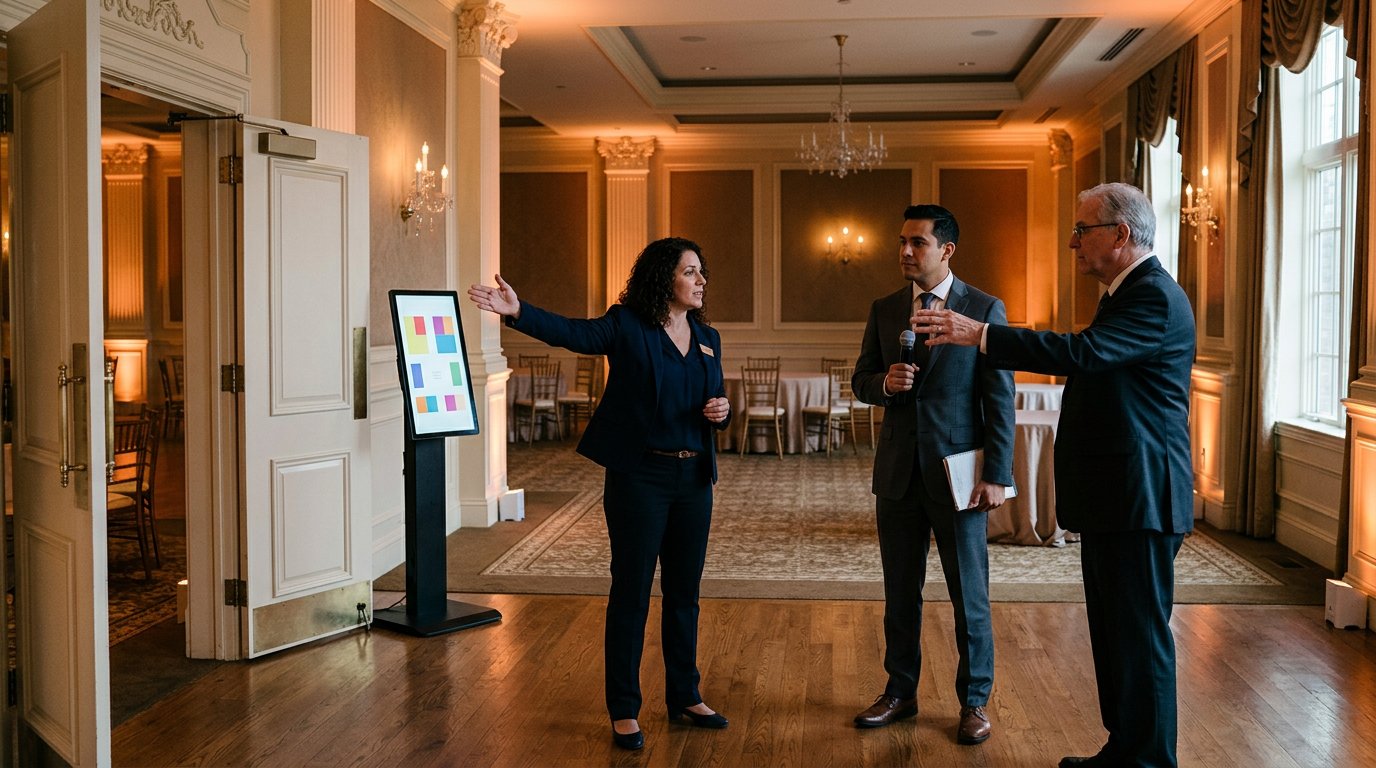
Wedding timeline coordination works best with one master schedule covering vendor and wedding-party arrivals, ceremony and reception times, the ceremony order, and planned reception events. It can also account for photography, travel between locations, venue access, setup, breakdown, and breathing room between major moments. Learn what to include, how to review and share the final plan, and how to coordinate buffers with your venue and vendors so you can enjoy the celebration.
Key Takeaways
- Keep venue addresses, key contacts, access details, and event order in one master plan, then share shorter versions with each group.
- Gather vendor input before finalizing the schedule, and send each person the details they need to do their part.
- Build in breathing room around transitions, especially when guests, wedding-party members, or vendors need to move between activities.
- Coordinate entertainment and guest-facing details with the venue plan, including bilingual DJ and MC service, lighting, and digital seating displays.
What Is a Wedding Day Timeline?
A wedding-day timeline brings ceremony and reception events, vendor arrivals, and key people together in one schedule. It helps coordinate handoffs and share useful details with vendors, family, and friends.
-
Compare first-look and no-first-look schedules
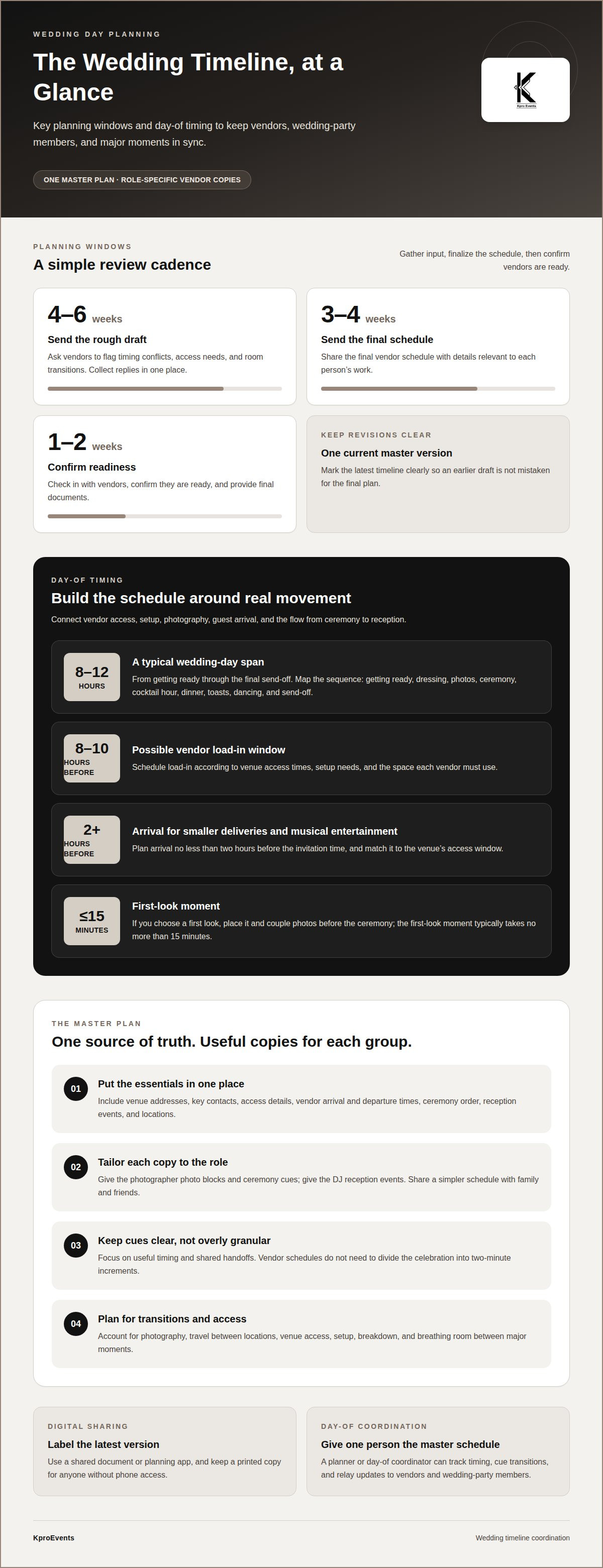
Choose a first-look or no-first-look plan before placing portraits. With a first look, schedule that moment and couple photos before the ceremony; it typically takes no more than 15 minutes, according to planner Lottie Fowler. Without one, reserve post-ceremony time for couple portraits. Check photography timing alongside makeup and guest arrival.
-
Map the day from getting ready to reception
Map the day in sequence: getting ready, dressing, photos, ceremony, cocktail hour, dinner, toasts, dancing, and send-off. A typical U.S. wedding day spans 8 to 12 hours from getting ready to the final send-off. Add vendor arrival times and ceremony and reception start and end times, then share locations with friends and family.
-
Assign day-of timeline coordination
Assign one person, such as a planner or day-of coordinator, to manage the master schedule and vendor contacts. That coordinator tracks timing, cues transitions, and shares updates with vendors and wedding-party members. Give them authority to relay changes so trusted friends can enjoy the celebration.
-
Choose digital timeline sharing tools
Share one current digital timeline with vendors, then give each a version tailored to their role, such as the photographer’s photo blocks or the makeup artist’s arrival time. Send family and friends a simpler schedule with ceremony and reception details. Use a shared document or planning app, label the latest version clearly, and keep a printed copy for anyone without phone access.
Final Timeline Review and Vendor Distribution
Effective wedding timeline coordination turns vendor feedback into a clear final schedule. Review the plan together, resolve conflicts, and share role-specific versions.
-
Gather vendor input
Send a rough draft to vendors 4–6 weeks before the wedding, so they can flag conflicts. Ask the photographer about photo timing and the venue team about access or room transitions. Invite the couple’s wedding planner and key vendors to identify dependencies, such as setup needing to finish before guests arrive. Collect replies in one place to keep feedback easy to track.
-
Revise the timeline with vendors
Use vendor feedback to adjust timing, then share the revised schedule for a final review. If the photographer needs more time for portraits, look at how that affects the ceremony or reception handoff. Good wedding timeline coordination connects that adjustment to the other vendors’ responsibilities. Contact vendors 1–2 weeks before the wedding to confirm readiness and send final documents. Keep one master version so an older draft doesn’t circulate by mistake.
-
Keep vendor timelines concise
Create a concise version for each vendor, showing their arrival and departure times, relevant locations, and the moments they support. A photographer may need portrait and ceremony cues; a DJ may need reception events. Leave out details unrelated to each role. Vendor timelines don’t need to divide the celebration into two-minute increments; focus on useful cues.
-
Use vendor timeline templates
Start with a vendor timeline template, then tailor it to your celebration. Wedding planners can use nine vendor timeline templates to prepare wedding-day schedules. Check each version against the master for consistent times, names, and locations. Send vendors the final schedule three to four weeks before the wedding, including only details relevant to their work.
Final Timeline Review and Vendor Distribution
Use a final review to catch conflicts, confirm responsibilities, and prepare clear vendor copies. This last wedding timeline coordination pass keeps revisions organized.
-
Gather vendor input
Send vendors a rough draft 4–6 weeks before the wedding and invite feedback about their own responsibilities. Ask the photographer to flag photo-schedule conflicts and the venue team to identify access or room-change issues. Collect responses in one place, so the couple and wedding planner can see which details need a decision.
-
Revise the timeline with vendors
Review the feedback together and adjust any overlapping activities. If a vendor’s arrival depends on another team finishing setup, clarify the handoff and update both schedules. Contact vendors 1–2 weeks before the wedding to confirm readiness and provide final documents. Mark the current master version clearly, so no one mistakes an earlier draft for the final plan.
-
Keep vendor timelines concise
Create a focused copy for each vendor, with relevant arrival and departure times, locations, and cues. A photographer needs photo timing; a DJ needs reception events. Leave out unrelated details, but keep shared handoffs visible. Vendor schedules don’t need two-minute increments; clear cues make the celebration’s flow easier to follow.
-
Use vendor timeline templates
Start with a template, then tailor it to each vendor’s role and the couple’s plans. Wedding planners can use nine vendor timeline templates to organize wedding-day schedules. Compare every copy with the master for consistent names, times, and locations. Send vendors the final schedule three to four weeks before the wedding, then use a later confirmation to resolve any remaining changes.
Venue-Specific Timeline Coordination
Let venue access, room layout, and travel shape the schedule, not just the ceremony start time. A clear plan connects arrival, setup, guest movement, photography, and meal service.
- Start with the venue’s address, phone number, rules, and contract-based access times. Vendor load-in can be scheduled 8 to 10 hours before the wedding. Smaller deliveries and musical entertainment should arrive no less than two hours before the invitation time. Match each arrival to the access window, setup needs, and the space vendors must use.
- Map the ceremony and reception locations, including any room change or walk between spaces. Ceremony timing affects guest arrival, photographer coverage, and when the caterer can prepare service. Share the sequence with those teams so photos, room access, and meal timing don’t compete for the same space. Add travel and transition time when locations differ.
- Compare the venue rental window with the full schedule. Wedding venue rental windows commonly run eight to 12 hours, and timelines should leave one hour at the end for cleanup. Place the final event and vendor load-out inside that window, rather than letting breakdown push beyond access. Confirm which items need to leave and where they go.
- Build a venue-specific schedule that shows who arrives, where each setup happens, and when spaces change use. If the photographer needs the ceremony area for portraits, coordinate that handoff with the venue team and caterer. KproEvents’ coordination services can help align vendor timing with venue logistics. Plan your venue and vendor timing with a coordinated schedule.
KproEvents: Bilingual MC and Coordination Services
KproEvents brings Bilingual MC and coordination services together for celebrations where music, hosting, and timing need to work in harmony. A bilingual MC can make announcements in more than one language, helping guests follow important moments. Coordination services support communication around the schedule and its transitions.
Consider this support when your timeline includes event formalities, changes in pace, or a mix of musical styles and generations. A DJ and MC can guide guests from one part of the celebration to another, while music selection reflects your preferences. Discuss the flow you want, from ceremony cues to reception announcements.
Lighting can shape the room’s atmosphere as the day moves from one moment to the next. Digital Seating Chart Concierge and Screen Displays can support guest seating and share event information. Consider these options alongside your venue plan so guest-facing details fit the schedule and the atmosphere you want to create.
For full wedding coverage, published pricing starts at $1,850. Enhancements and luxury set-ups can estimate between $2,500 and $5,000. These are distinct published price details, so consider the coverage or enhancements that fit your plans rather than assuming one amount covers every service or setup.
Kenny and Kendrie are a husband-and-wife team who understand weddings from both the DJ and emcee side and as a bride and groom. Their approach centers on personable communication and coordination shaped around each event, rather than a one-size-fits-all schedule. Share your priorities, venue details, and planned event flow to start the conversation.
Contact KproEvents to discuss your wedding timeline and celebration plans.
Make Your Wedding Day Flow Feel Like Yours
Your schedule doesn’t need to account for every tiny moment. It should support the way you want the day to feel, with enough structure for vendors to work together and enough flexibility for you to be present. As you finalize plans, choose the parts of the celebration that matter most, then let those priorities guide the pace.
KproEvents offers Bilingual MC and coordination services, along with Lighting and Digital Seating Chart Concierge and Screen Displays to complement your plans. Thoughtful wedding timeline coordination connects guest-facing moments with the schedule, helping the day feel personal rather than over-scripted.
When you’re ready to shape a plan around your venue, priorities, and celebration, the KproEvents team brings DJ and coordination experience to the process. Contact KproEvents to discuss your wedding timeline. Your day can have a clear rhythm and still leave room for joyful surprises.
Frequently Asked Questions
What should your timeline include?
Include the schedule, venue addresses, vendor names and contact details, and arrival and departure times. Add a photography schedule with requested family groupings, plus venue layouts showing where key items go. A packing list can note where each item should be set up and what happens to it at the end of the night. Keep a printed copy with these day-of documents.
Who should you share your timeline with?
Share the master schedule with the wedding planner or coordinator, venue manager, and vendors. Give wedding-party members and parents a shorter copy with their call times and responsibilities. Family members helping with portraits may need a photo list, while vendors need setup details and contacts. Tailor each version to its audience so people can find their cues quickly.
Why are timelines essential?
A timeline turns separate plans into a sequence people can follow. It helps reveal when two activities need the same room or when a key person must be in two places. For example, comparing a photo list with the ceremony schedule can expose a conflict before the day. A shared reference also helps the coordinator communicate changes without relying on memory.
How long should each part of a wedding ceremony and reception take?
Set durations according to the ceremony style and reception plans. A secular ceremony typically takes about 30 minutes, while a full Catholic Mass may take close to an hour. Receptions typically run three to four hours. For a sample reception plan, allow time for dinner, toasts, and dancing, then adjust the sequence to match your venue and priorities.
When should wedding vendors arrive and set up?
Schedule each arrival around the venue’s access window and the work that must happen before guests enter. Include the vendor’s name, contact details, arrival time, setup location, and expected departure in the master schedule. The officiant usually needs to arrive no more than 30 minutes before the ceremony starts, though arriving earlier is preferable. Coordinate other arrival cues with the venue.
How much buffer time should you build into a wedding timeline?
Leave room between major activities and protect transitions that involve moving people, changing rooms, or resetting a space. A useful rule is the 30/5-minute rule: a task that normally takes five minutes may take 30 minutes on the wedding day. Add a separate cushion where delays could affect several later events, rather than placing all spare time at the end.
