

Your DJ can also emcee, bringing cultural traditions, music, and reception moments together with a clear, welcoming voice. A wedding DJ for mixed cultures should respect both families’ musical preferences, introduce dances with helpful context, pronounce names and cultural titles carefully, and guide the celebration with bilingual Spanish announcements when needed.
You already know the right music can help every guest feel included, and the key is finding a DJ who listens to your priorities. This article explores cultural fit, song choices, dance introductions, reception timing, and bilingual DJ and MC coordination for your New Jersey celebration.
Key Takeaways
- Look for a DJ who can blend the music your families love while keeping different generations included.
- Give guests a little context before traditional dances so they can join in or enjoy watching.
- Share must-play songs, preferred genres, and music to avoid when shaping the reception playlist.
- Plan meaningful music and dances around the reception flow, with room for timing changes.
How do I know if a DJ is a good fit for my multicultural wedding?
A good fit blends meaningful traditions with contemporary music and guides guests through reception moments. A wedding DJ for mixed cultures should listen to both families’ priorities and explain how they’ll shape the musical flow, including transitions with live performers.
Blending Cultural and Contemporary Music
Ask how the DJ would move between your chosen genres. Salsa, merengue, and bachata can meet U.S. Top 40, while Bollywood, Afrobeats, K-pop, and American classics can each add a distinct sound. The sequence should reflect your families’ favorites and the energy you want, rather than treating every culture as a separate set. If drummers or musicians will perform, discuss cues and handoffs so live music fits smoothly into the reception.
Choosing One DJ or Separate DJs
One wedding DJ for mixed cultures can work well when they’re comfortable blending your requested styles and guiding the reception. Separate DJs may suit an event planned around distinct music sets or live performances. Consider how you want transitions handled and who will coordinate cues. Choose the setup that best connects the music and schedule, rather than assuming one arrangement fits every multicultural wedding.
Assessing Cultural Music Experience
Ask which cultural celebrations and genres the DJ has worked with, how they build playlists, and whether they can share sample mixes. Discuss must-play songs, music to avoid, and how they’ll pronounce names or cultural titles. Explain traditions that need a musical cue or coordination with performers. These specific examples help you assess whether the DJ understands your plans.
Review the agreement for performance hours, overtime terms, included services, and cancellation terms. Look for clear wording on when overtime begins, how it’s charged, what the service includes, and what happens if either party cancels. This gives you a shared understanding before the wedding day.
Providing guests with context for traditional dances
A short, welcoming introduction can help guests understand a traditional dance without turning it into a lesson. Before a Hora, for example, the emcee can explain that guests may join the circle or watch from their seats. For a money dance, the couple can decide how they want it introduced and whether guests need simple directions. The goal is to share context while leaving participation comfortable and voluntary.
Each tradition deserves its own wording. The emcee should confirm the dance’s name, the couple’s preferred pronunciation, and any details they want shared. That keeps an announcement respectful and personal, rather than relying on assumptions about a guest’s background. If the celebration includes a ceremonial song or family-led dance, a brief introduction can tell guests what they’re about to see and when the moment begins.
Guest requests can add fun, but they work best alongside the couple’s priorities. A request for a current hit might fit between traditional favorites, while a song that clashes with the planned moment may need to wait. Agree on must-play and do-not-play guidance before the reception, then treat requests as useful signals, not automatic instructions. This helps represent different cultural backgrounds without letting one guest set the tone for everyone.
Throughout the night, read the dance floor song by song. If guests respond to a familiar classic, follow it with music that keeps that group engaged, then make room for another family’s favorites. If the floor thins during a genre shift, adjust the next selection instead of forcing a long set. These small choices help entertainment feel shared across generations. Thoughtful reception introductions and transitions can keep each dance clear, welcoming, and connected to the celebration.
Building the reception playlist around preferred songs
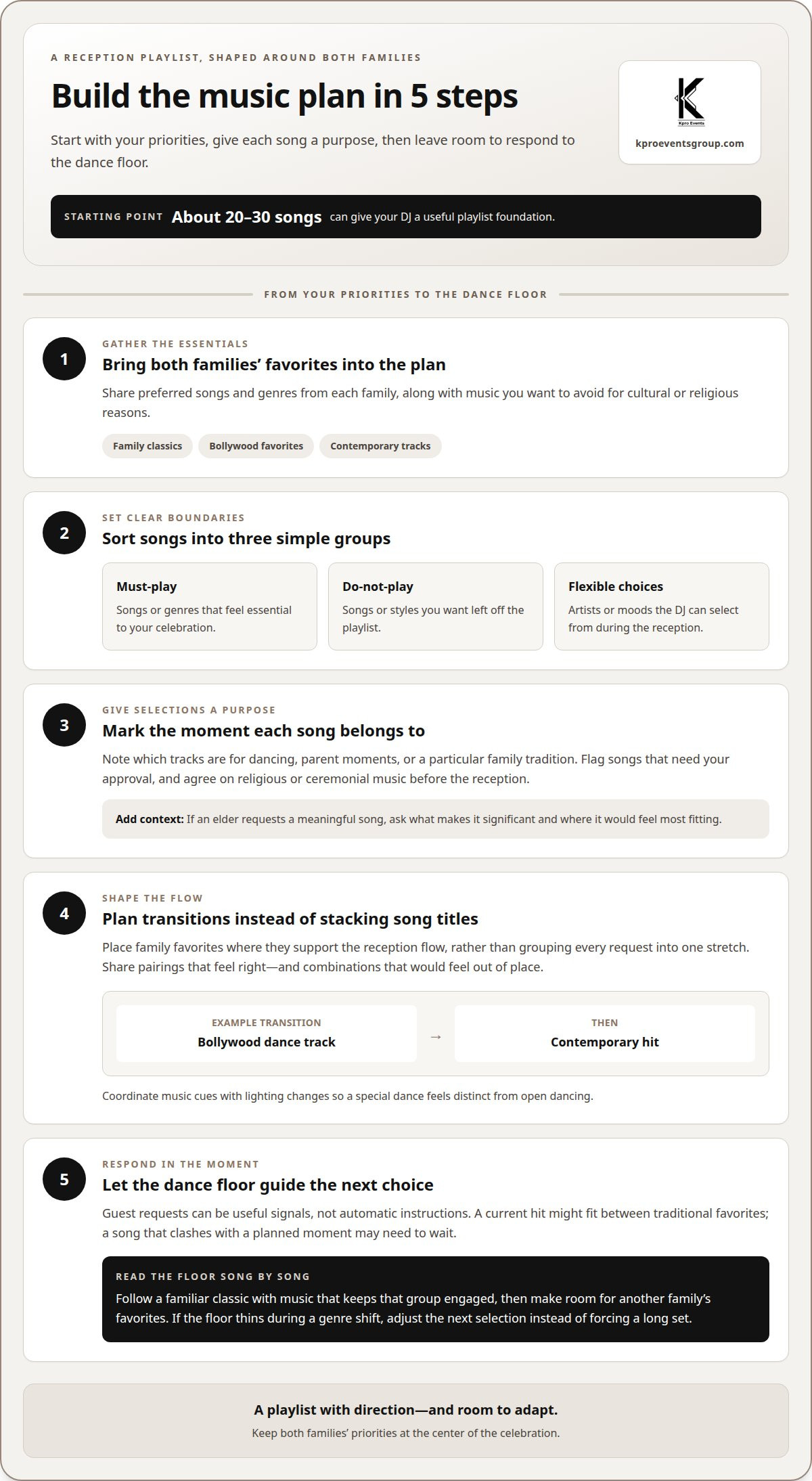
Build the playlist from your priorities, not a one-size-fits-all template. Share must-play songs and genres from both families, plus anything you’d rather avoid for cultural or religious reasons. A list of about 20 to 30 songs can give the DJ a useful starting point. Include Bollywood favorites, family classics, and contemporary tracks you want guests to remember.
Give each selection a purpose. Mark songs for dancing, parent moments, or a particular family tradition, then note which tracks need your approval. Religious or ceremonial music deserves special care, so agree on those choices before the reception. If an elder has a meaningful song request, ask what makes it significant and where it would feel most fitting. That context helps honor family preferences without assuming everyone wants the same music.
- Must-play: Name the songs or genres that feel essential to your celebration.
- Do-not-play: Identify songs or styles you want left off the playlist.
- Flexible choices: Share artists or moods the DJ can select from during the reception.
Use those notes to plan transitions, not just collect titles. A Bollywood dance track might lead into a contemporary hit, while a family classic can bring older and younger guests together. Tell the DJ which pairings sound fun to you and which combinations would feel out of place. This gives the playlist direction while leaving room to respond to the dance floor.
Timing matters, too. Place meaningful songs where they support the reception flow, rather than stacking every family favorite into one stretch. Coordinate music cues with lighting changes so a special dance feels distinct from open dancing. For example, reserve a family-requested song for a planned moment, then shift into upbeat selections that invite everyone back onto the floor. Clear preferences make each choice more personal.
Timing traditional songs and dances during the celebration
Place cultural music where it supports the celebration’s flow, not as an isolated checklist. A procession can begin with a meaningful entrance song, while a parent dance can create space for a family moment. A toast may call for a softer transition before dancing resumes. Discuss each tradition’s purpose and timing so the music feels connected to the people and moments being honored.
Start by identifying which customs need a musical cue. Ask whether your celebration includes entrance songs, processionals, or a money dance. A Jewish Hora, for example, can begin with “Hava Nagila,” signaling guests to gather for the chair lift. A Bollywood medley or salsa track may be a must-play. Note who introduces each moment and what should happen immediately afterward.
Next, place those cues within the reception timeline. Ceremony music, parent dances, toasts, and transitions can each hold culturally meaningful songs. Avoid crowding every tradition into one stretch; mixing them with open dancing can give each moment room to register. Following a planned dance with a contrasting genre can invite guests back onto the floor and keep the celebration moving.
Build flexibility into the sequence. A toast may run long, a procession may shift, or family members may need more time to gather. Tie musical cues to the moment rather than relying only on a fixed clock. Share the order of events with the DJ and identify which songs are essential. Then decide which transitions can move if the schedule changes. That balance helps diverse traditions feel intentional without making the evening rigid.
Give every memorable moment a clear cue and a comfortable transition. Plan your wedding reception timeline around the traditions and songs that matter most to your families.
KproEvents
KproEvents brings families’ music, traditions, and reception timelines together with bilingual DJ, MC, and coordination services. The DJ and MC organize the timeline, make announcements and introductions, select music, and create the event’s overall vibe. Share the songs, dances, and family moments you want included so the team can coordinate the entertainment around your priorities.
Event lighting can distinguish a special dance from open dancing, while Digital Seating Chart Concierge and Screen Displays can help welcome guests and guide them to their seats. These services complement the music and coordination without taking attention away from the traditions at the heart of your day.
If you’re planning a multicultural wedding in New Jersey, contact KproEvents to talk about your celebration.
Shape a celebration that feels like yours
Start by picturing how you want the room to feel when both families are together. That shared vision can guide your choices and help the celebration feel personal rather than borrowed from a template. A wedding DJ for mixed cultures can be part of that planning conversation, turning your priorities into a clear direction for the day.
KproEvents’ team brings a personable approach to wedding planning, with Kenny and Kendrie understanding the couple’s perspective firsthand. When you’re ready to talk through your plans, contact KproEvents about your wedding. Your ideas are a lovely place to begin.
Frequently Asked Questions
Can my DJ also act as an emcee?
Yes. Before booking, decide which spoken moments you want the emcee to handle and which belong to your planner or family members. For example, you might want the emcee to introduce the wedding party while a relative welcomes guests. Agreeing on those roles ahead of time helps avoid duplicate announcements and keeps microphone handoffs clear.
Do multicultural DJs cost more?
Not automatically. The total depends on factors such as performance length, experience, and what the coverage includes. Compare proposals by matching the same event scope: ceremony, cocktail hour, and reception coverage can differ from reception-only coverage. Separate any optional enhancements from core entertainment so you can see how each choice affects the overall plan.
How do I find a wedding DJ experienced with mixed cultures and multicultural weddings?
Use a real planning scenario to see how a DJ listens and responds. Describe a moment where two families have different expectations, then notice whether the DJ asks useful follow-up questions and reflects your priorities accurately. A thoughtful discussion should leave you with a clearer sense of how decisions will be shared, rather than a generic promise to play a range of music.
How can a wedding DJ blend different cultures’ music without awkward transitions?
Ask for transitions that respect the shape of each song. A DJ can let a track reach a natural musical ending before moving into the next selection, rather than cutting across a vocal or instrumental phrase. You can also identify songs that should play in full because of their meaning. That gives important selections room to land without making every transition identical.
How do I create a wedding playlist that represents both families and cultures?
When sharing song titles, include the artist and the recording version you prefer. A familiar title may have several recordings, remixes, or edits, and the exact version can matter to your family. You can also share a short note about why a selection matters. That context helps distinguish a song chosen for its lyrics from one chosen for its melody or family history.
What wedding traditions and music cues should I share with a multicultural DJ?
Along with the tradition’s name, provide the practical details that make it run smoothly: who will lead it, where participants should gather, and who gives the start signal. Note what should happen immediately afterward, such as clearing space for the next formal moment. These handoff details help the DJ coordinate with your wedding party and keep guests oriented.
