

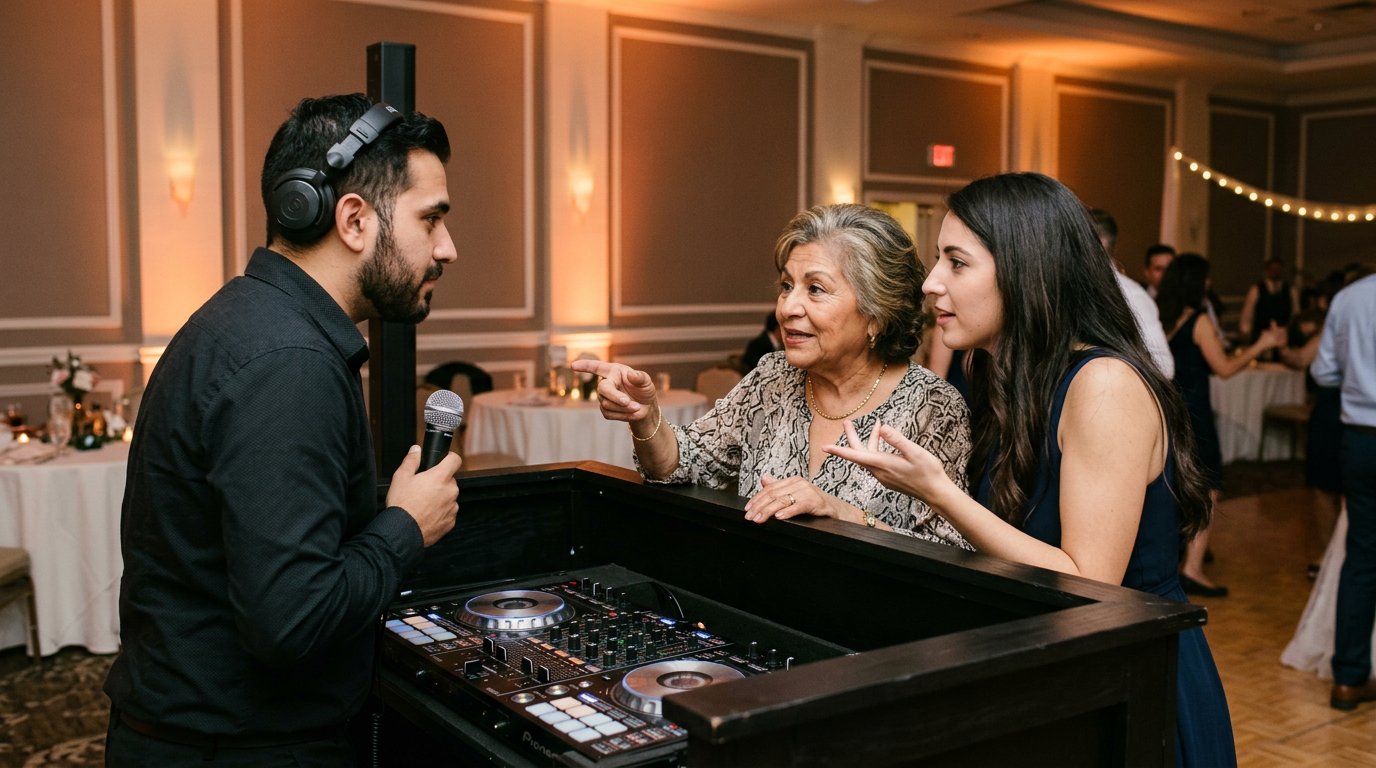
Build your bicultural wedding reception playlist around both families’ musical backgrounds, familiar wedding classics, guest requests, and the atmosphere you want. These bicultural wedding reception playlist planning tips can help you balance cultural favorites with songs guests across generations know and love. Shape the music from relaxed dinner moments to a lively dance floor, leaving room for meaningful traditions and personal picks.
Key Takeaways
- Balance music from both families’ backgrounds with songs guests of different ages can enjoy.
- Pair familiar wedding classics with personal picks to make key moments feel like yours.
- Gather guest requests in advance, then use them to guide the music without letting them take over.
- Set the reception’s energy to suit your plans, from relaxed conversation to a full dance floor.
1. Considering guests’ musical preferences, ages, and backgrounds
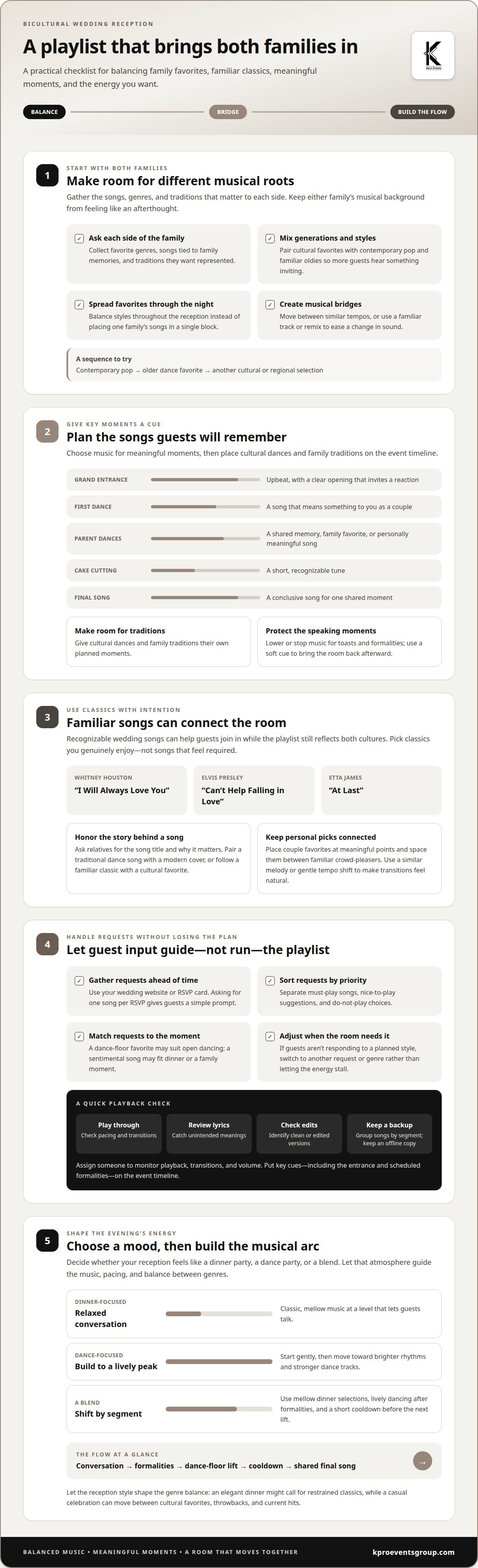
Start by asking each side of the family for favorite genres, songs tied to family memories, and traditions they want represented. One relative might request salsa, while another loves Motown or country. Include these preferences alongside contemporary pop and familiar oldies, so guests across generations hear something inviting. A bicultural wedding reception playlist works best when neither family’s musical background feels like an afterthought.
Balance styles throughout the reception instead of grouping one family’s favorites into a single block. Arrange songs with similar tempos, then use a familiar track or remix to bridge a change in sound. For example, follow contemporary pop with an older dance favorite before moving into another cultural or regional selection. This gives guests an easy way into the music, even if they don’t know every song.
Schedule clear pauses for toasts and formalities. Lower or stop the music before a toast, then use a soft cue to bring the room back afterward. This helps guests focus on the speaker and makes the transition into the next moment feel smooth.
There’s no single equipment budget for every wedding. Costs depend on the venue’s sound needs and who is responsible for the equipment. Before setting your budget, clarify those responsibilities with your DJ or band, venue, and planner, especially for a larger reception.
Give key moments their own music cues: the grand entrance, first dance, parent dances, cake cutting, and final song. Choose an upbeat entrance track that invites a reaction, a first-dance song that means something to you, and a short, recognizable tune for cake cutting. Add cultural dances and family traditions to the timeline, so each has its planned moment.
2. Including recognizable classic wedding songs
Recognizable wedding songs help guests join in, even when the playlist reflects two cultures. Consider “I Will Always Love You” by Whitney Houston, “Can’t Help Falling in Love” by Elvis Presley, or “At Last” by Etta James. These familiar melodies can sit alongside family favorites and current hits without defining the whole playlist. Choose classics you genuinely enjoy, not songs that feel like wedding requirements.
Give cultural traditions their own musical space. Include songs relatives associate with celebrations, family gatherings, or meaningful milestones. You might pair a traditional dance song with a modern cover, or follow a widely recognized classic with a cultural favorite. This sequence welcomes guests into an unfamiliar sound while honoring its importance to your family. Ask relatives for the song title and why it matters to make informed choices.
For your first dance, choose a song that feels true to your relationship. It might remind you of your first date, a road trip, or a moment you still laugh about. Parent dances can honor a shared memory, a family favorite, or another personally meaningful song. If you want the dance to feel brief and relaxed, select a portion that feels complete rather than letting the full track dictate the moment.
Think about how one song hands the room to the next. A slow classic can lead into a livelier track with a similar melody or a gentle tempo shift; a sudden jump from a quiet ballad to a fast dance song may feel jarring. Place a couple’s favorite songs at meaningful points, then space them between familiar crowd-pleasers. For example, a song from a memorable road trip could lead into an upbeat family favorite. Keep your selections connected to the mood you want, and use your reception’s music plan to bring those personal moments together.
3. Taking song requests during the reception or in advance
Collect requests on your wedding website or RSVP card before the reception. Asking for one song per RSVP gives guests a simple prompt without turning the playlist into an open-ended wish list. Invite them to name a favorite and, if they like, explain why it matters. Requests may reveal styles that connect your families, from a beloved cultural dance song to a current hit. Keep responses together for easy review.
Separate must-play songs from nice-to-play suggestions and do-not-play choices. This protects meaningful selections while leaving room to adapt to the reception’s mood. Treat guest requests as helpful clues, not automatic instructions. A dance-floor favorite might fit during open dancing, while a sentimental request may work better over dinner or during a family moment.
Choose a grand entrance track with a clear opening and upbeat feel, so guests know when to cheer. Space out popular dance-floor songs rather than playing every crowd favorite back-to-back. Gradually raise the tempo between reception segments, using a familiar chorus or remix to connect genres. If guests aren’t responding to a planned style, switch to another request or genre instead of letting the energy stall.
Build a backup playlist grouped by reception segment, and keep an offline copy available. Play the selections from start to finish beforehand to catch awkward transitions, check pacing, and identify songs that need clean or edited versions. Review lyrics for unintended meanings, then assign someone to monitor playback, transitions, and volume. Add key cues, including the grand entrance and scheduled formalities, to the event timeline to prevent confusion if plans change.
4. Choosing the reception's energy and event style
Decide whether your reception should feel like a dinner party, a dance party, or a blend. That choice shapes the energy of the evening, not just the song list. These bicultural wedding reception playlist planning tips start with the atmosphere you want: relaxed conversation, lively dancing, or both. For a dinner-focused celebration, choose classic music at a level that lets guests talk. If dancing is the main event, build from gentle opening music toward a lively peak.
Shape the evening in distinct segments. During dinner, choose mellow selections that leave room for conversation and announcements. After formalities, shift toward brighter rhythms and stronger dance tracks. A short cooldown gives guests time to catch their breath before the next lift. Finish with a conclusive song that brings everyone together for one shared moment.
Let your reception’s style guide the balance between genres. An elegant dinner might call for restrained classics, while a casual celebration can move between cultural favorites, throwbacks, and current hits. You could open with a playful bridal-party Soul Train line, then settle into a more relaxed dinner mood. Among useful bicultural wedding reception playlist planning tips, matching the sound to each moment keeps the event feeling connected.
Share your preferred vibe, must-play songs, and do-not-play list with the person guiding the music. Agree on what to do if guests aren’t responding to a planned genre. For example, switch from a slower set to a familiar, higher-energy song, then build the pace again. That flexibility keeps the evening personal without locking every moment into a fixed playlist.
For a reception that moves smoothly from dinner to dancing, plan your reception’s music around the atmosphere you want guests to remember.
KproEvents
KproEvents can help shape a reception playlist that brings both families into the celebration. Its DJ and Bilingual MC and coordination services connect music selection with event timing, announcements, and the flow between formal moments and dancing. Share your must-play songs, family traditions, preferred energy, and do-not-play choices to create a plan that feels personal to you.
Event lighting can complement the reception’s mood, while KproEvents’ Digital Seating Chart Concierge and Screen Displays support the guest experience. These details can work alongside your music plan without taking attention away from the people and traditions at the heart of the day.
Contact KproEvents to discuss your wedding playlist and reception plans.
Give your playlist a personal final touch
Before your wedding, choose a few songs that capture the feeling you want guests to take home. A lively closing track, a meaningful family favorite, or a shared song from your relationship can make the final moments distinctly yours. Use these bicultural wedding reception playlist planning tips as a starting point, then make your last choices reflect your story and the people celebrating with you.
KproEvents can help shape a music plan around your reception’s atmosphere and the traditions that matter to you. Its coordination services help the music fit naturally into your celebration. You don’t need to make every choice at once. Start with the moments that matter most, then let the rest take shape around them.
Contact KproEvents to plan your music, and take the next step toward a celebration that feels like you.
Frequently Asked Questions
How do you plan a wedding reception playlist that represents both cultures?
Choose songs and moments that reflect both families, then connect each selection to its role in the celebration. Invite a trusted relative from each side to suggest music tied to a family gathering or milestone, for example. Note whether each song is meant for dancing, a tribute, or background listening. That context helps the playlist feel thoughtful rather than like a collection of unrelated tracks.
How should couples balance music from each culture in a wedding playlist?
Balance doesn’t have to mean dividing the playlist into equal halves. Consider which traditions are central to your families and where each fits naturally in the reception. You could feature a meaningful family song during a special moment, then weave other cultural favorites into the dancing. Talk together about what feeling included means to each of you, and make choices from that shared understanding.
How do you choose songs that guests from both cultures will recognize and enjoy?
Choose a mix of familiar songs and selections that matter personally to your families. A well-known romantic song might invite guests to sing along, while a family favorite can make a particular moment feel more intimate. Ask relatives across generations for one song they associate with celebration. Familiarity helps guests join in, while personal meaning gives the music its heart.
How can you blend different genres and languages smoothly in a wedding playlist?
Think about how songs feel as well as how they sound. A shared mood, similar rhythm, or recognizable melody can make a transition between genres feel natural. For instance, move from a lively song in one language to another with a similar dance feel, rather than switching abruptly from a slow ballad. Preview the sequence aloud and note where a softer bridge or brief pause would help.
What should couples ask a DJ about experience with multicultural weddings and music pronunciation?
Discuss how the DJ will guide a reception with multiple traditions, languages, and family preferences. Share names, song titles, and phonetic pronunciation notes for introductions or announcements, along with an audio example when pronunciation matters. KproEvents offers bilingual DJ, MC, and coordination services for celebrations in New Jersey, New York, Connecticut, and Pennsylvania.
How do you handle cultural or religious music traditions and etiquette at a wedding reception?
Talk with family members who understand a tradition and clarify what its music means, when it belongs, and how guests should participate. Some songs may be appropriate for listening but not dancing; others may call for a specific moment or respectful introduction. Avoid treating a cultural or religious selection as a generic party track. Clear context helps honor the tradition and welcome guests into the moment.
