

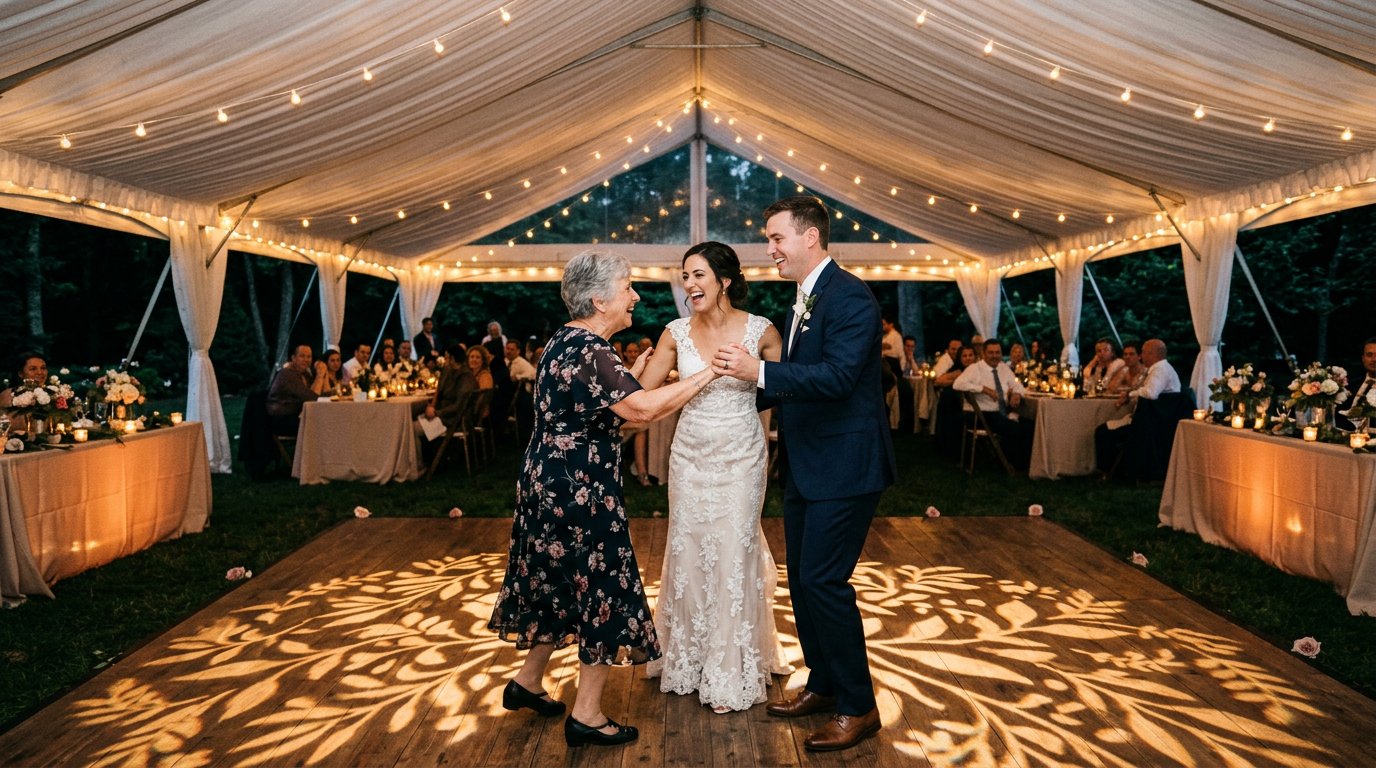
Plan outdoor wedding reception lighting in layers. String lights create a warm glow across a tent or dining area, while a gobo projects a pattern near the dance floor. Together, they welcome guests, define a place to dance, and add atmosphere to photos after sunset. Color and brightness matter, too: warm amber can feel intimate, while colored light can energize the dance area without giving the whole reception the same look. A tailored plan considers how you’ll use each zone, balancing the tent, tables, dance floor, and photo moments instead of flooding the space with one effect. Here, you’ll learn how string lights and gobos work outdoors, what to consider for dancing and photos, and how wedding reception lighting can help your celebration feel connected from dinner through the last song.
Key Takeaways
- Plan uplighting around the reception areas you want guests to notice, and let the color support the atmosphere.
- Balance string lights for dinner and dancing so the tent feels inviting throughout the evening.
- Use gobo patterns to give a ceiling, wall, or dance floor a distinct visual touch.
- Shape outdoor lighting around the venue, photos, and celebration flow for a more cohesive feel.
How can a professional light an outdoor wedding reception?
A lighting professional plans around the venue’s surfaces, focal points, and event flow. The aim is to connect the ceremony, dinner, and dancing without using the same brightness everywhere.
Uplighting, Spotlights, and Wall Washing
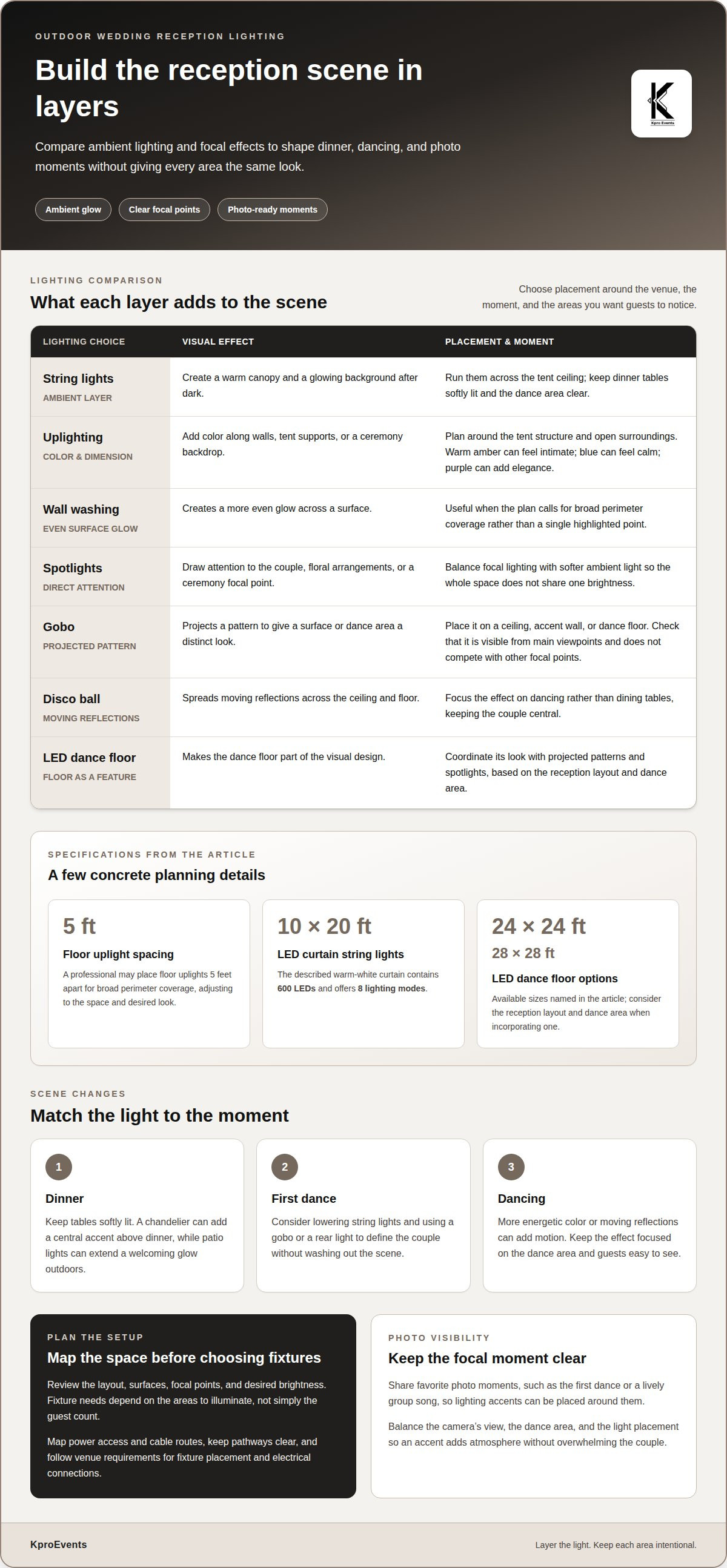
Uplights add color and dimension along walls, tent supports, or a ceremony backdrop. For broad perimeter coverage, floor uplights can be placed 5 feet apart; a professional adjusts placement to the space and the look you want. Spotlights can draw attention to the couple, floral arrangements, or a ceremony focal point, while wall washing creates a more even glow across a surface.
Indoors, the room’s walls and existing light shape the plan. Outdoors, the tent structure and open surroundings matter. Map the ceremony and reception zones, then balance focal lighting with softer ambient light. Fixture needs depend on the surfaces and areas to illuminate, not simply the guest count.
Uplighting Color Choices
Color sets the mood. Warm amber can make photos feel romantic and intimate; blue can feel calm, while purple can add elegance. Red brings energy, and green can suggest balance. Choose colors that complement your palette, or use a subtle wash that keeps flowers, décor, and people in focus.
Plan for changes between moments, such as softer light during dinner and more energetic color on the dance floor. Lighting costs depend on the venue, fixtures, coverage, and setup complexity, so compare quotes that describe the same areas and effects. A simple plan might focus on one backdrop or key zone; a broader design can layer uplighting and spotlights.
Power, Safety, and Venue Restrictions
Before setup, map power access and cable routes, keeping pathways clear and following venue requirements for placement. Venue rules and local fire-safety requirements guide decisions about electrical connections, suspended fixtures, candles, and sparklers. Open flames and sparks may be a concern near tent fabric or décor, so account for their placement and the venue’s restrictions in the plan.
Lighting needs vary by location: an indoor room may call for wall coverage, while an outdoor tent may need focused light over dining and dancing. Determine fixture needs by reviewing the layout, surfaces, focal points, and desired brightness. U.S. Department of Justice guidance notes that shadows and surface glare can make signs harder to distinguish from their backgrounds, so include sign visibility in the lighting plan.
How a professional uses string lights to photograph a couple dancing in a tent
String lights give a tent a warm canopy after dark, framing a couple as they dance beneath the night sky. A lighting professional considers the camera’s view, the dance area, and the strings’ placement so lights add atmosphere without overwhelming the couple. For example, lights across the tent ceiling can create a glowing background, while a clear dance area keeps attention on the movement.
Popular reception choices include string lights, chandeliers, uplighting, and spotlights. In a tent, a chandelier can add a central accent above dinner, while patio lights extend a welcoming glow outdoors. Arrange hanging lights to highlight the couple’s first dance, then keep dinner tables softly lit. The right combination depends on the layout and the moments you want to feature.
Brightness should change with the event. Light that feels comfortable during dinner may be too bright for dancing, so consider dimmer switches. Lower the string lights for the first dance, then adjust the rest of the scene to preserve a soft glow. Testing the light at a lower setting can help balance the overall look.
For a distinct backdrop, warm-white LED curtain string lights measuring 10 feet by 20 feet contain 600 LEDs and offer 8 lighting modes. A professional can position a curtain behind the dance area, creating a glowing background for photos. The lighting plan can also balance that accent with the overhead strings, rather than letting one bright feature dominate the frame.
Share your favorite photo moments, such as the first dance or a lively group song, so the professional can plan where each accent belongs. If you want a coordinated lighting plan for your tent, explore professional event lighting as part of your reception planning.
Gobos creating patterns on ceilings, walls, and dance floors
A gobo projects a pattern onto a surface, giving the dance area a defined look. Place the image on a ceiling, accent wall, or dance floor. A pattern above the couple can draw guests’ eyes to the first dance, while a wall projection adds ambiance without spotlighting every table. Make sure the image is visible from the room’s main viewpoints and doesn’t compete with centerpieces or other focal points.
During a first dance, a photographer balances flash with the existing room light. One approach uses a flash on each side of the dance floor to illuminate the couple while preserving the scene’s atmosphere. The photographer adjusts the flash to suit spotlights and projected patterns, keeping the dance floor’s character instead of making the image look flat.
For a dark, intimate dance, a rear light can create a rim around the couple’s outlines without washing out candles or string lights. A disco ball offers a different effect: moving reflections spread across the ceiling and floor, adding motion while the couple remains central. Keep the effect focused on dancing rather than dining tables.
LED dance floors make the floor itself part of the visual design. Available sizes include 24-by-24-foot and 28-by-28-foot options. A professional can consider the reception layout and dance area when incorporating one, then coordinate its look with projected patterns and spotlights. The goal is a clear dance-floor focal point that complements the room’s other lighting.
Choose effects to suit the mood: a single gobo creates a clean focal point, while a disco ball adds movement across the room. For a first dance, a rear light can outline the couple; for a lively party, moving colored light can capture the energy in photos. Each option shapes the scene differently, so keep the couple and guests easy to see.
Outdoor wedding reception lighting
Outdoor wedding reception lighting should make the setting inviting after sunset and give each moment its own visual focus. Consider the tent, open surroundings, dinner area, and dance floor together. A thoughtful plan can transform an outdoor space from a beautiful dinner setting into a dramatic backdrop for evening dancing and photos.
Strong, colorful backlighting can create silhouettes of the couple in photos. A lighting professional can position the source behind the couple and aim it toward the camera’s view, keeping the outline clear against the darker background. This effect suits a dramatic entrance or a quiet portrait. The color and intensity shape the mood, while the photographer’s angle determines how the silhouette appears.
For a larger glowing backdrop, a warm-white LED curtain measures 10 feet by 30 feet and contains 900 LEDs. It can frame a photo area or add a bright visual layer behind the reception. Another option is an 8-foot Lighted Cherry Blossom LED Tree with RGBW lights and 1,000 LEDs. Its colored glow can add a decorative focal point beside a tent entrance or reception area.
A 12-foot-tall white organza curtain with LED lights can draw the eye upward and soften the tent’s structure. An 8-foot version with warm-white lights offers a lower backdrop option. A professional can place these accents where they support the layout, rather than competing with the dance floor or guests’ view. Uplights can also bring color to tent supports and define the edges of key areas.
The clearest takeaway: outdoor lighting works best when each fixture has a purpose. Backlighting creates photo drama, curtains add a luminous backdrop, and uplights help define the setting. Share the moments you want to highlight, from the couple’s entrance to dancing, and plan outdoor reception lighting around them.
KproEvents: Lighting
KproEvents provides lighting to help shape the atmosphere across your outdoor reception. If you’re planning string lights, uplights, or a focused dance-floor effect, a tailored plan can bring the tent, dining area, and evening celebration together. The right choices depend on your venue, the moments you want to highlight, and the look you want guests to experience.
Lighting works alongside the reception timeline. Coordinating the visual plan with dinner, introductions, and dancing helps each part of the evening feel connected. KproEvents also offers DJ and Bilingual MC services and coordination services to support event flow alongside the lighting.
Share your venue details and the atmosphere you have in mind to start planning lighting for your celebration. Contact KproEvents to book a consultation for your wedding reception.
Shape the atmosphere around your celebration
Choose the feeling you want guests to carry from dinner into the evening, then let it guide your wedding reception lighting. A soft, romantic glow can make a tent feel welcoming, while a brighter dance area can invite guests to join in. Start with a plan shaped around your venue, personal style, and timeline, rather than a one-size-fits-all setup.
Kenny and Kendrie understand wedding planning from both sides, and the KproEvents team can bring lighting together with DJ and Bilingual MC services and coordination services. KproEvents also offers a Digital Seating Chart Concierge and Screen Displays, connecting guest arrival and reception flow with the evening’s atmosphere.
When you’re ready to shape a lighting plan around your celebration, contact KproEvents about reception lighting. Your outdoor reception can feel unmistakably yours, from the first welcome to the final dance.
Frequently Asked Questions
How does a lighting professional choose the right LED lights for your event?
A lighting professional matches each fixture’s color and effect to the space and the moments you want to emphasize. For a reception in NYC, NJ, CT, or PA, the venue’s layout and surfaces help shape the plan. You can also share your preferred atmosphere and photo priorities, so the lighting supports your style rather than competing with it.
How does a professional plan lighting for a party?
A professional plans around the room layout, event timeline, and the changes guests will experience throughout the celebration. For example, the plan can use a welcoming look during arrivals, keep faces visible during toasts, and shift the mood as dancing begins. The professional coordinates fixture placement and timing so one part of the party doesn’t distract from another.
What are the benefits of using LED lights for parties and weddings?
LED lights offer a long rated lifespan, which can be helpful for event lighting used repeatedly. They can last 25,000 to 50,000 hours, depending on product quality and use. Their different colors and effects also let a professional tailor the look to a room or event moment. The right choice still depends on the desired atmosphere and lighting plan.
What lighting works best for a wedding dance floor?
The best choice makes the dance floor feel like a clear focal point while keeping the couple and guests visible. A professional can combine a defined pool of light with color or a projected effect, then shape the scene around the music and photos. For a quieter first dance, a softer look can suit the moment; a more energetic party can call for livelier effects.
How do uplighting, string lights, chandeliers, and candles compare?
Each option serves a different purpose. Uplighting adds color to vertical surfaces, string lights create a canopy effect, and a chandelier gives a room a central overhead feature. Candles add a small, intimate glow to tables. A professional can balance these choices by considering the space, the mood you want, and which areas need the most attention.
How much does wedding reception lighting cost?
The cost depends on the package and location.
