

Let the evening move from cocktail-hour mingling to a warm welcome and dinner, then place cake cutting and dessert before opening the dance floor. Guests get natural chances to connect, eat, celebrate, and settle into the party, the heart of thoughtful wedding reception flow ideas.
You want a celebration that feels lively without turning every moment into a production. Give formalities a clear place, leave breathing room between them, and let guests enjoy conversation, dessert, and dancing as the mood shifts.
Here are practical ways to arrange mingling, cake and dessert, quiet pauses, and optional activities, plus a flexible order you can shape around your guests, traditions, and the atmosphere you want.
Key Takeaways
- Give guests time to mingle and greet one another before the evening moves into its next moments.
- Build a flexible timeline that accounts for dinner service, toasts, and the transitions between them.
- Choose when to cut the cake based on whether you want dessert to pause the party or flow into it.
- Add relaxed options for guests who want to chat, enjoy a quiet moment, or join the dancing later.
Cocktail hour and guest mingling
Plan at least an hour for cocktail hour, and consider 90 minutes when ceremony and reception venues are some distance apart. Popular ways to entertain guests include a photo booth, trivia, or a crossword, alongside drinks, greetings, and photos.
-
Plan the Cocktail-Hour Buffer
Schedule cocktail hour as the bridge between the ceremony and reception events. It gives guests time to travel, settle in, and connect before dinner or toasts begin. When venues are separate, cocktail hour may start more than half an hour after the ceremony ends because of travel. Build that transition into the timeline, and avoid scheduling a grand entrance while guests are still arriving.
-
Welcome Guests with Drinks and Photos
Give guests a clear first stop, with drinks ready as they arrive. Decide whether you and your partner will greet everyone during cocktail hour or join them after photos. Completing wedding-party and family photos before the ceremony can leave you free to welcome guests. If photos happen afterward, prioritize the family groupings with your photographer so portraits fit the available window.
-
Plan Guest Entertainment
Choose one or two easy activities guests can enjoy at their own pace. A photo booth gives friends and relatives a reason to gather, while wedding trivia or a crossword can spark conversation between generations. Keep activities optional, and place them where people naturally gather, away from the entrance and busy drinks area.
- Set a transition cue before cocktail hour begins. For example, plan an announcement inviting guests to find their seats before dinner. Leave room for travel and lingering conversations, then schedule toasts and dessert later. This order helps the evening move forward without making every moment feel rushed.
One sample places pre-ceremony cocktails and greetings at 3:30pm, then a second, shorter cocktail hour with appetizers and snacks at 5:30pm. At evening weddings, couples can step away for a quick bite and sunset photos without missing their meal.
What is a Modern Wedding Reception Timeline, and Why Does It Matter?
Build a flexible sequence around dinner, traditions, and the evening’s energy. A reception in the United States typically lasts four to seven hours, including cocktail hour.
-
Set the Reception Timeline
Start with the ceremony end and reception finish, then place dinner, speeches, dances, and cake cutting between them. Dinner service typically takes 60 to 90 minutes; first dances and parent dances with toasts often take 15 to 20 minutes. Add 10 to 15 minutes between major moments. These ranges help you shape a schedule, not force every celebration into identical timing.
-
Coordinate the Entrance and Music
Choose an entrance song, decide whether the wedding party enters together or separately, and share the order with your DJ or live band. A playful introduction can build excitement without adding extra formalities. Coordinate the music cue with the person making announcements, then move into the first dance or dinner. A DJ or band can keep transitions clear when timing shifts.
-
Align Meal Service with Vendors
Ask the wedding planner to align dinner service, vendor breaks, and room transitions in one timeline. A plated meal, buffet, or family-style dinner changes how guests are served and how the evening moves. Reserve at least 30 minutes for vendor meals. WeddingWire recommends serving vendor meals immediately after the couple is served, so vendors can take a break while guests eat.
-
Schedule Dinner, Speeches, and Outfit Changes
Place toasts between courses or after dinner, and give each speaker a three-to-six-minute target. Avoid stacking speeches, outfit changes, and cake cutting into one transition. If you plan a second look, schedule time to change while guests eat or enjoy a planned pause. A common mistake is packing the timeline tightly; leave 10 to 15 minutes between key events.
Build cultural or religious traditions into an order that feels meaningful to you, and tell your planner and entertainment team what each moment needs. For a smooth entrance, share names, the order, and music cues in advance.
Cake cutting and dessert
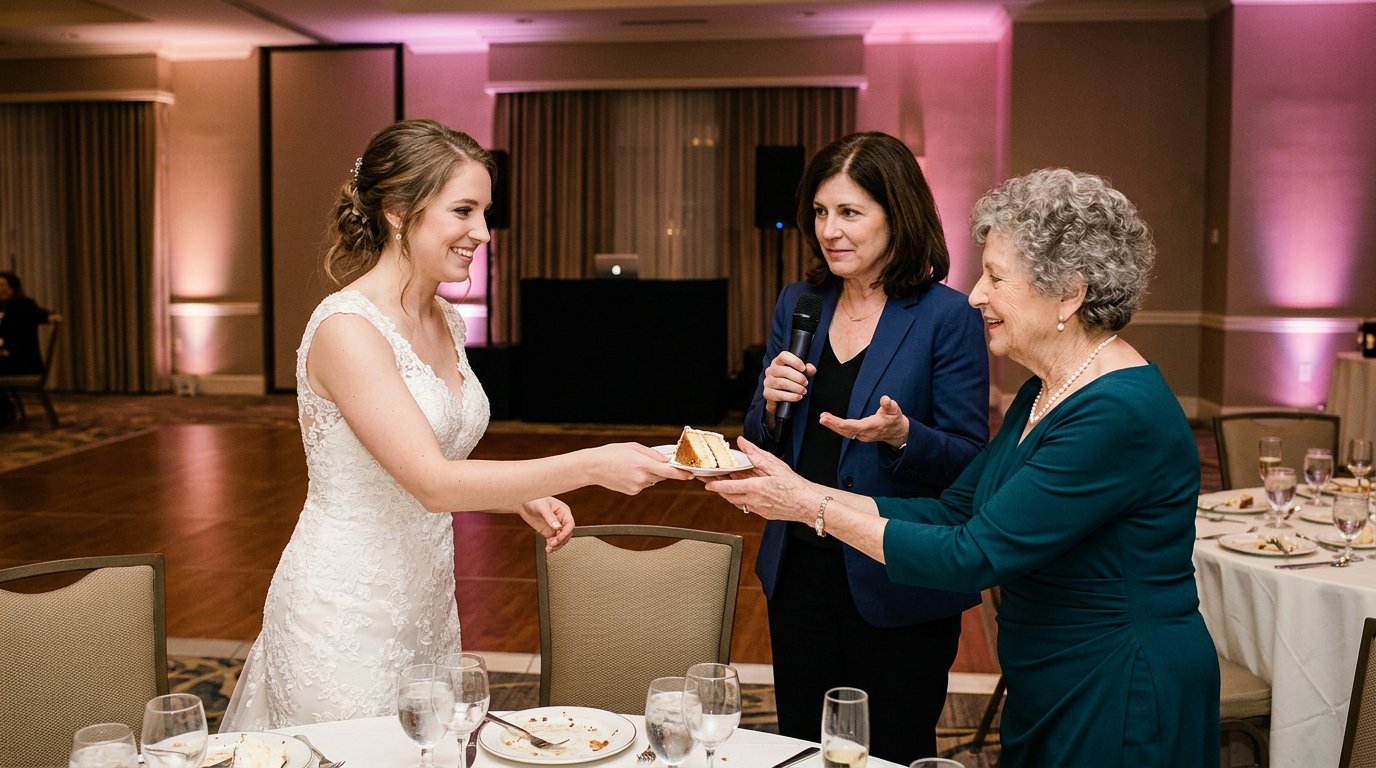
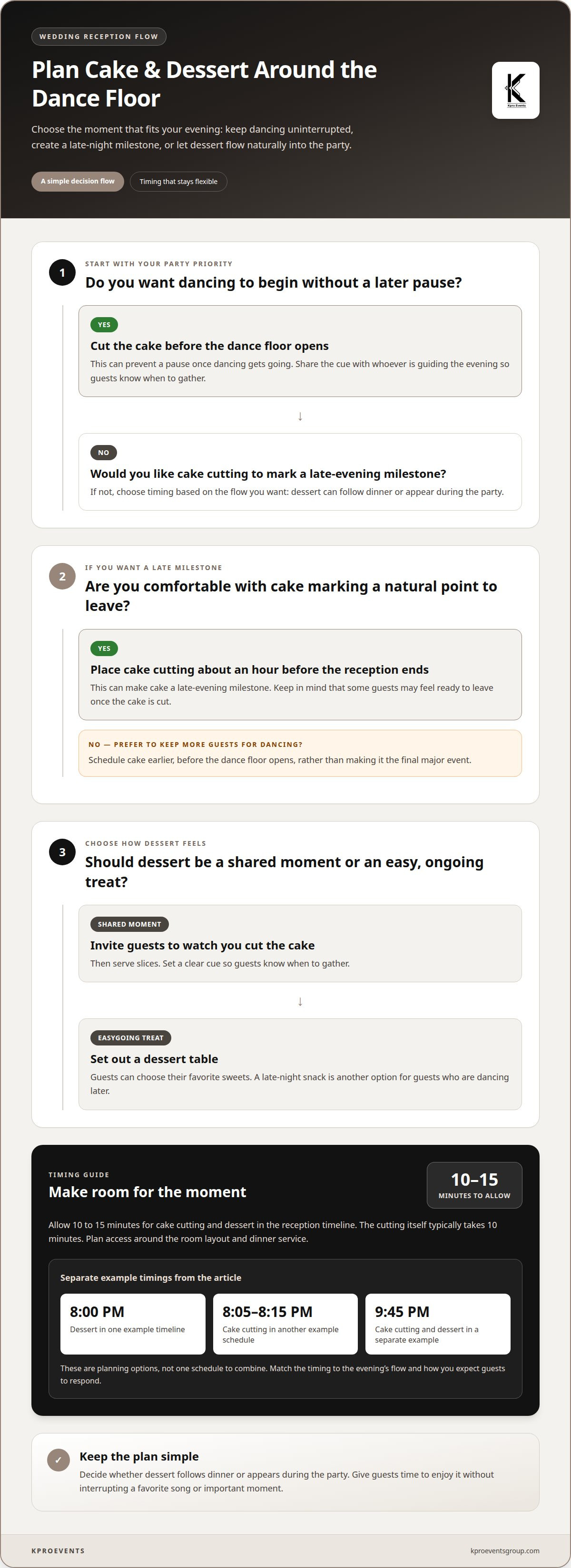
- Choose the cake-cutting moment based on what you want guests to do next. Scheduling it before the dance floor opens can prevent a pause once dancing gets going. Allow 10 to 15 minutes for cake cutting and dessert in the reception timeline; the cutting itself typically takes 10 minutes. Share the cue with whoever is guiding the evening, so guests know when to gather.
- Decide whether dessert should feel like a shared event or an easy, ongoing treat. For a classic moment, invite guests to watch you cut the cake, then serve slices. For a more casual approach, offer a dessert table where guests can choose their favorite sweets. Either option can fit the celebration; plan access around the room layout and dinner service.
- Place cake cutting about an hour before the reception ends if you want it to mark a late-evening milestone. Keep in mind that some guests may feel ready to leave once the cake is cut. If you want more people to stay for dancing, schedule the cake earlier, before the dance floor opens, rather than making it the final major event.
- Choose an alternative that suits your guests and the mood you want. A dessert table offers several choices instead of a single cake, while late-night snacks give dancing guests another bite later. Keep the plan simple: decide whether dessert follows dinner or appears during the party, then give guests time to enjoy it without interrupting a favorite song or important moment.
One example timeline places dessert at 8pm, while an example wedding reception schedule sets cake cutting from 8:05 PM - 8:15 PM. Another example schedules cake cutting and dessert for 9:45 p.m.; these are planning options, not a single sequence to combine. Match the timing to the flow of the evening and how you expect guests to respond.
Some couples save cake cutting for after the other key moments, since guests may take it as a natural point to leave. If dancing is a priority, cut the cake before opening the dance floor so the party does not need to pause once dancing is underway. Alternatively, placing it about an hour before the reception ends makes the cake a late-evening marker while leaving room for a final stretch of dancing.
Low-key reception ideas
Balance lively moments with easy ways for guests to pause, chat, or join in later.
- Offer an optional activity guests can enjoy at their own pace. A photo booth, wedding trivia, or a crossword can spark conversation without turning the reception into a formal group game. Place the activity away from the entrance and main walking paths. These wedding reception flow ideas keep arrivals moving while giving guests who prefer quieter fun a welcoming place to gather.
- Avoid making everyone focus on the schedule at once. Some guests can dance while others chat or take part in an activity. If you want a relaxed evening, do not stack announcements, traditions, and dances back-to-back. Choose the formal moments that matter most, then leave open stretches for eating and easy conversation.
- Make your entrance and traditions personal, not automatic. Choose a simple welcome instead of an extended entrance, and include only the dances or customs that feel meaningful. If a family tradition needs its own moment, schedule it where guests can enjoy it without rushing from dinner. A flexible order lets different generations take part comfortably.
- Give guests a clear next step as the reception winds down. If you want an after-party, arrange a nearby bar or venue in advance so the transition is easy to follow. Keep it optional, and share the plan before the final songs. Guests who want to continue can head there, while others can say goodbye without feeling they have missed another formal event.
- Choose the mood you want guests to remember, then build around it. These wedding reception flow ideas can make room for dancing, familiar traditions, quiet conversation, and open time without filling every moment. If you want support shaping those transitions around your priorities, talk through your reception flow.
KproEvents
KproEvents’ DJ and MC service, featuring a Bilingual MC and coordination services, can bring your reception timeline and guest experience together. The team organizes timelines, announcements, introductions, and music selection, helping transitions feel connected while leaving room for your traditions and quieter moments.
Lighting can help shape the mood as the evening shifts from dinner to dancing. A Digital Seating Chart Concierge and Screen Displays can support guest arrival and seating. Each element can be planned around the kind of celebration you want, rather than a one-size-fits-all schedule.
Contact KproEvents to talk about your reception plans.
Shape an Evening That Feels Like Yours
Let your priorities guide the final choices. Decide which moments deserve everyone’s attention, where you want room for conversation, and how you’d like guests to feel as the evening unfolds. Wedding reception flow ideas are a starting point, not a script. Leave space to enjoy the celebration instead of watching the clock.
Before finalizing your timeline, share the moments that matter most and any traditions you want woven into the evening. KproEvents’ team can help shape those preferences into a coordinated plan that feels personal to you. Clear cues and thoughtful transitions help everyone stay in step while keeping the atmosphere warm and easy.
Ready to bring your plans together? Contact KproEvents to plan your reception. Your celebration can reflect what matters to you, one joyful moment at a time.
Frequently Asked Questions
What is a typical wedding reception timeline and order of events?
A common order moves from guest arrival and seating to the couple’s entrance, dinner, dancing, dessert, and farewell. Place formal dances and toasts around dinner, then keep later moments relaxed. Treat this as a starting point, not a fixed script. Your traditions, meal service, and preferred party mood can shape what happens next.
When should dinner, toasts, first dance, cake cutting, and dancing happen?
One sample schedule begins seating and introductions at 6:00 PM, followed by the first dance and welcome toasts at 6:15 PM. Dinner runs from 6:30 PM to 7:45 PM, with parent dances and toasts afterward. Dancing starts at 8:15 PM, and cake cutting can follow during the evening. Use this as a sample sequence, then adapt it to your priorities.
How do wedding reception timelines differ for plated dinner, buffet, and cocktail-style receptions?
Each meal style affects how guests move through the reception, so build the timeline around that movement. For a plated dinner, coordinate courses with planned toasts or dances. For a buffet, let guests move through the serving area without scheduling a major announcement during that transition. A cocktail-style reception can keep food and conversation flexible, with formal moments grouped into clear pauses.
